Know your pond

Pond plants & algae.

Not everything green is algae. Take a closer look at the growth in your pond before deciding what care it needs.

Ask about your pond

Start with what you can see

Where does it grow? Are there individual leaves, hairlike strands or just discolored water? These clues help narrow down the possibilities.

Photographs are reference examples, not a diagnosis of your pond.

7 reference entries

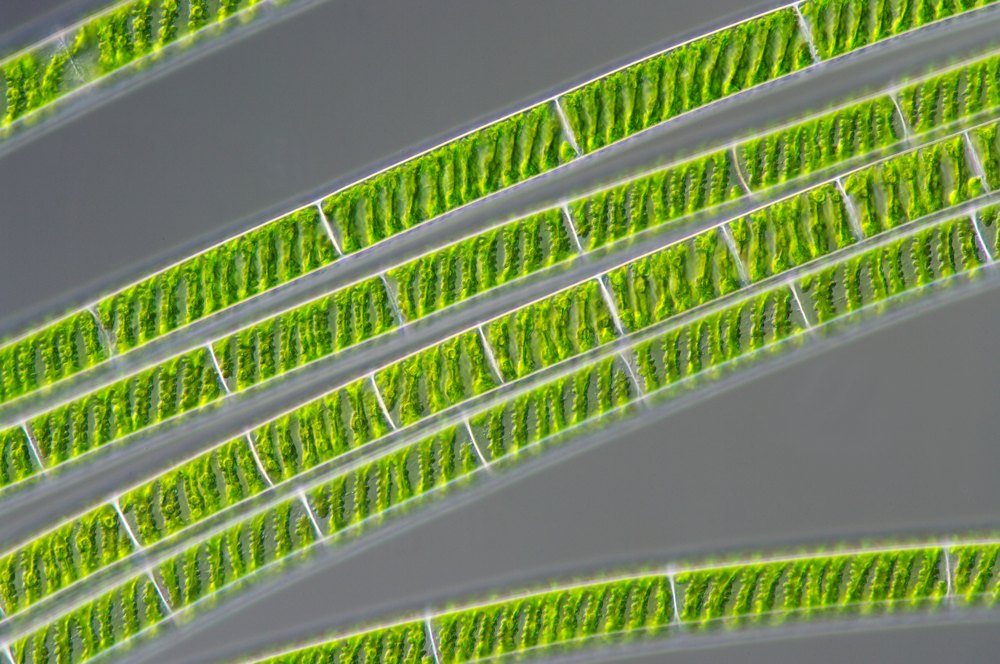
Spirogyra strands under magnification

Algae

Filamentous algae

Includes Spirogyra and other genera

  • Hairlike green threads that collect in loose clumps.
  • May form cottony or slippery mats at the surface.
Lookalikes & identification notes

Submerged plant fragments can look similar. The microscope photo shows the threads, not their appearance across a whole pond.

Photo: Wiedehopf20 · Source · CC BY-SA 4.0. Sized for display.
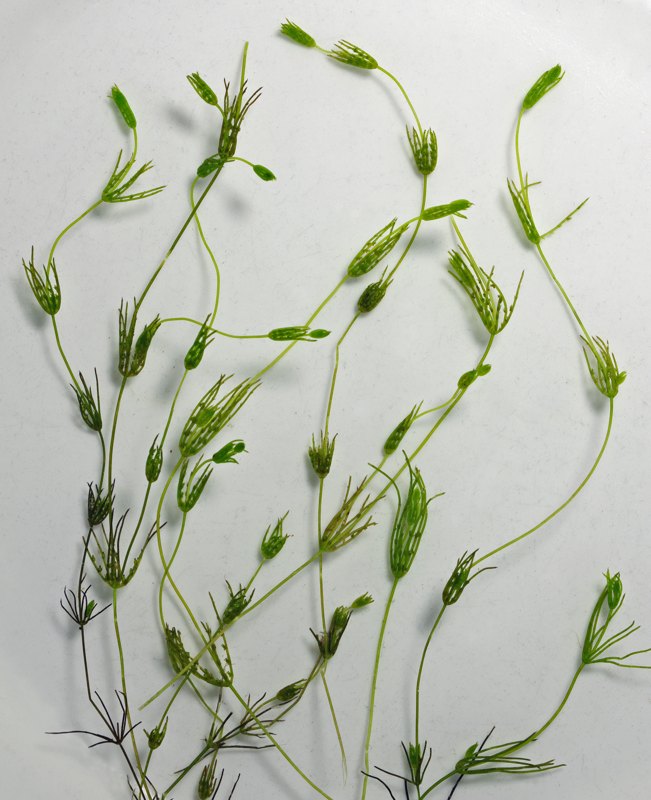
Chara globularis specimen

Algae

Chara / stonewort

Chara species

  • Branching underwater growth with whorls of short branchlets.
  • Often coarse or gritty, despite looking like a leafy plant.
Lookalikes & identification notes

Chara is an alga, not a flowering plant. It can be confused with coontail and other submerged growth.

Photo: Christian Fischer · Source · CC BY-SA 3.0. Sized for display.

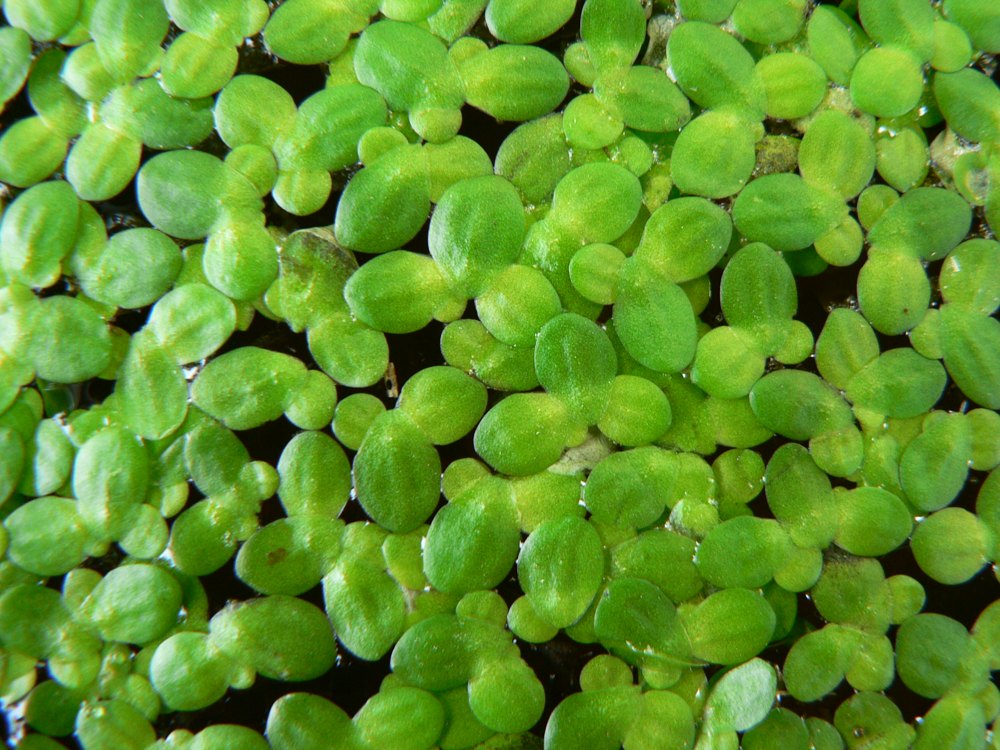
Duckweed fronds at the water surface

Floating plants

Duckweed

Lemna and related genera

  • Tiny flat, round-to-oval green fronds, single or clustered.
  • Usually has a fine root hanging below each frond.
Lookalikes & identification notes

Rootless watermeal is smaller and looks like pinhead-sized grains. Dense mats require a closer look.

Photo: Wikimedia Commons contributor (see source history) · Source · CC BY-SA 3.0. Sized for display.

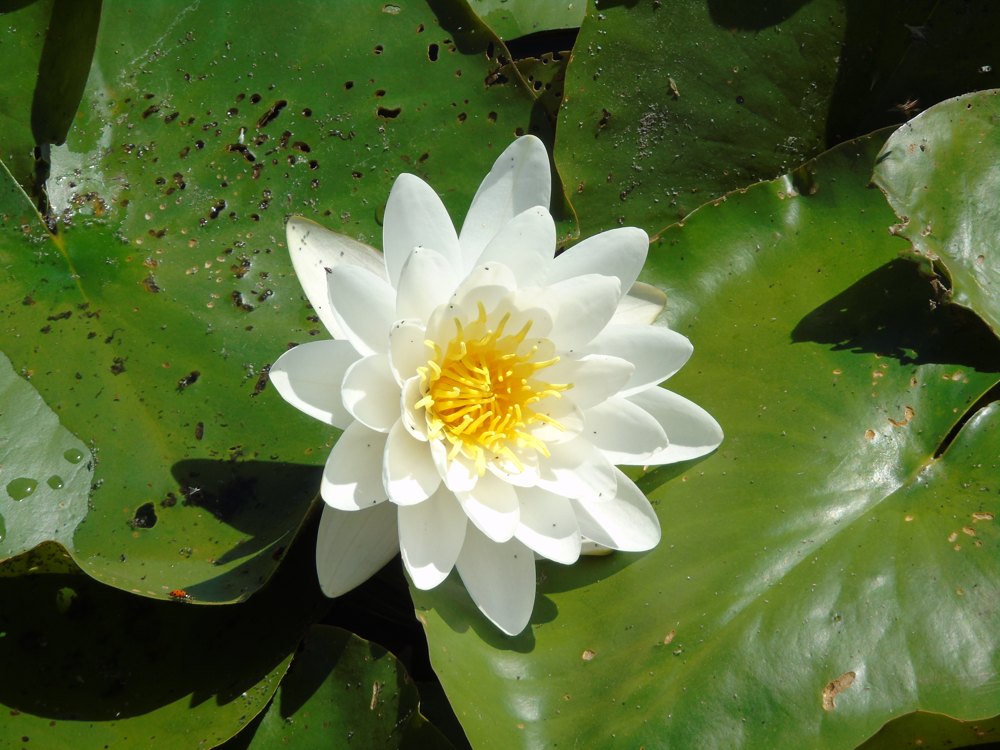
White water lily, Nymphaea alba

Floating plants

Water lilies

Nymphaea species

  • Broad floating leaves attached to long stalks.
  • Leaves commonly have a notch; flowers rise to the surface.
Lookalikes & identification notes

Water lilies are rooted plants with floating leaves. Species and ornamental varieties differ; this picture does not identify every local lily.

Photo: Fernando Losada Rodríguez · Source · CC BY-SA 4.0. Sized for display.
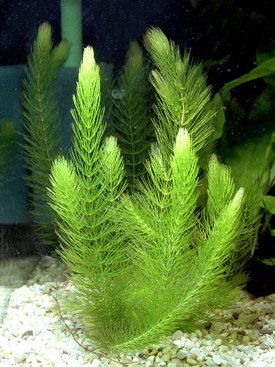
Coontail’s dense underwater stems

Submerged plants

Coontail

Ceratophyllum demersum

  • Stiff, finely forked leaves arranged in whorls.
  • Bushy stem tips resemble a raccoon’s tail; no true roots.
Lookalikes & identification notes

Other finely divided plants and Chara can look similar. Inspect individual leaf forks rather than the overall green mass.

Photo: Totodilefan · Source · Public domain. Sized for display.

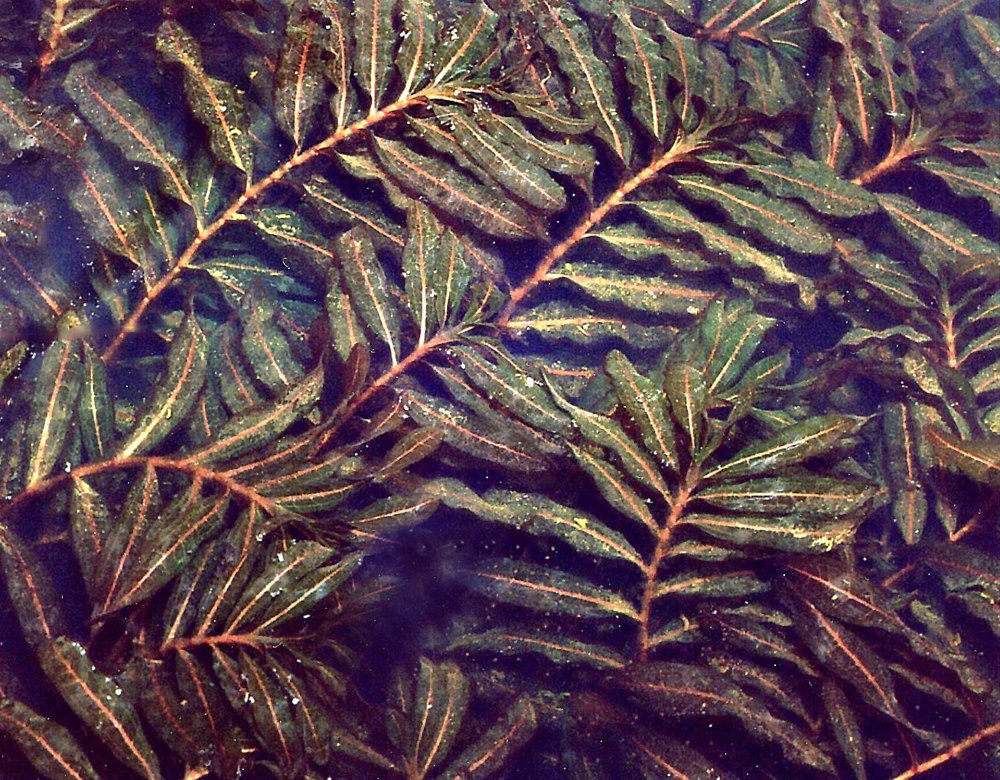
Curled, crinkled pondweed leaves

Submerged plants

Curly-leaf pondweed

Potamogeton crispus

  • Alternating leaves with visibly wavy, crinkled edges.
  • Fine teeth along the leaf margin; strong growth in spring.
Lookalikes & identification notes

An introduced invasive pondweed in the Northeast. Other pondweeds look similar, so confirm the curled and toothed leaf edges.

Photo: Wikimedia Commons contributor (see source history) · Source · CC BY-SA 3.0. Sized for display.

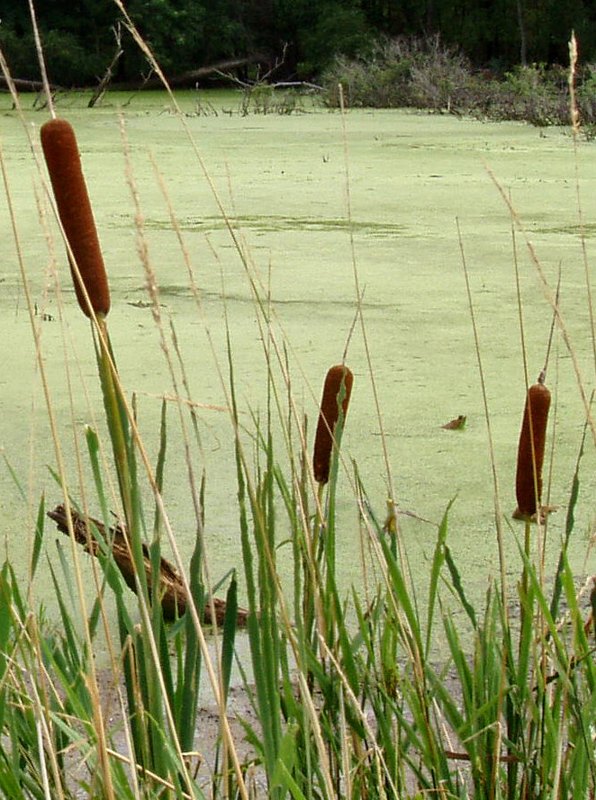
Cattails growing at the water’s edge

Shoreline plants

Cattails

Typha species

  • Tall, upright, strap-shaped leaves in shoreline stands.
  • A distinctive brown, sausage-shaped flower or seed head.
Lookalikes & identification notes

Iris and other shoreline plants have similar leaves. The brown head is a useful clue, but exact cattail species need closer examination.

Photo: Wikimedia Commons contributor · Source · Public domain. Sized for display.

Green water needs a different kind of check.

Planktonic algae can color the water without visible leaves or strands. Cyanobacteria can also create green water or surface scum. A photograph cannot determine whether a bloom is toxic. Keep people and pets away from suspected blooms and contact your local health or environmental agency.

Not sure what’s growing?

Take a wide photo from the bank and a close-up from a safe position. Tell us when the growth appeared and whether it floats, grows underwater or stands along the shoreline. Avoid handling suspected blooms or moving plants between ponds.

Request a free consultation